

You get to work and realize you cannot remember the last ten minutes of the drive. You were steering, braking and changing lanes, but your mind was somewhere else. That is highway hypnosis, and almost every driver has felt it. Most of the time nothing happens. Sometimes the driver on autopilot does not see the stopped car ahead. This guide explains what highway hypnosis is, what causes it, how to stop it, and what to do if a driver who zoned out hits you. It is written by The Miller Law Firm, home of The Texas Bulldog, a Houston personal injury firm.
- What is highway hypnosis?
- Highway hypnosis vs. drowsy driving
- What causes it
- Warning signs
- How to avoid highway hypnosis
- Is highway hypnosis dangerous?
- Texas crash numbers
- Truck drivers and long hours
- If a zoned-out driver hits you, who is at fault?
- What to do after the crash
- What our clients say
- Frequently asked questions
- Sources
What is highway hypnosis?
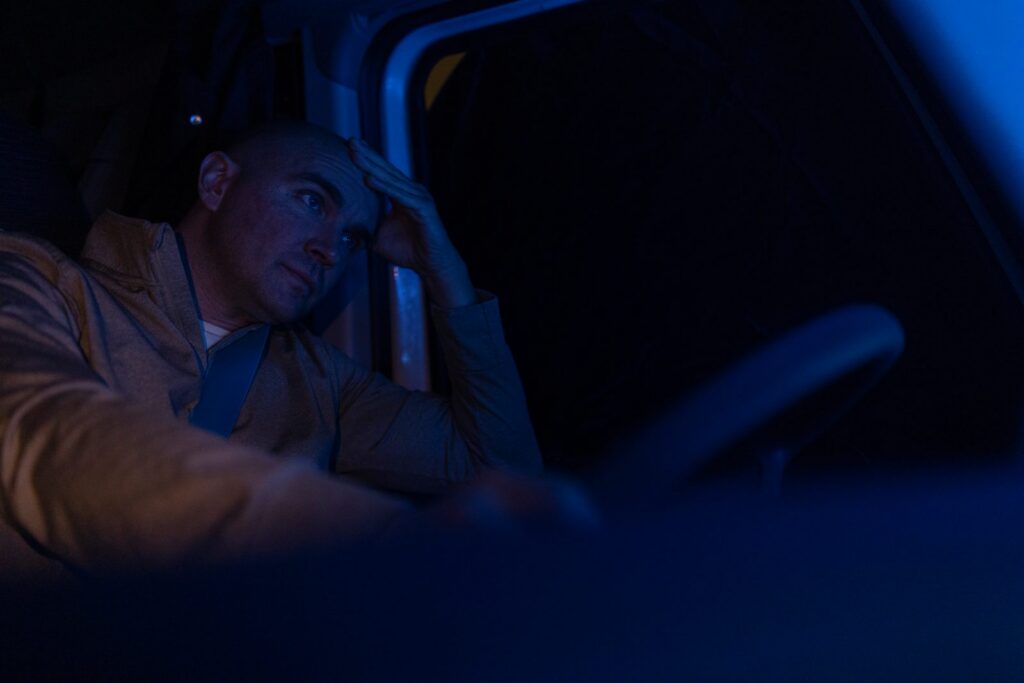
Highway hypnosis, also called road hypnosis or freeway hypnosis, is a state where you drive on autopilot. Your hands and feet keep doing the work, but your attention fades. Many drivers only notice it afterward. They reach their exit, or their driveway, and cannot remember how they got there. Some find they are farther along than they thought.
It happens because driving on a familiar or boring road takes very little thought. Your brain hands the job to habit, the same way it does when you brush your teeth, and your mind drifts. Cleveland Clinic describes it as a lost sense of time while driving, with the details of the drive turning fuzzy.
Highway hypnosis vs. drowsy driving
People often mix these up. They are related, but they are not the same thing, and the difference matters.
| Highway hypnosis | Drowsy driving | |
|---|---|---|
| What it is | Driving on autopilot with dulled attention | Driving while fighting sleep |
| Eyes | Open, often a fixed stare | Heavy, blinking, may close for seconds |
| Main cause | Monotony and routine | Not enough sleep, or driving when your body wants to sleep |
| Can happen when rested? | Yes | No |
| How dangerous | Researchers disagree when the driver is rested | Always dangerous |
The real danger is when the two meet. A tired driver on a long, straight highway is far more likely to drift into a trance, and a driver in a trance is less likely to notice that they are getting sleepy. That combination is behind many crashes that look, on paper, like the driver simply “drifted.”
What causes highway hypnosis?
- Monotonous roads. Long, straight stretches with little to look at, like I-10 west of Katy or US-59 toward Victoria. A 2003 driving-simulator study found drivers showed more signs of fatigue on a monotonous road than on a varied one, with fatigue peaking about 20 minutes into the drive.
- Familiar routes. The daily commute is a common setting. When you know a road well, you stop looking at it closely.
- Steady speed. Cruise control and light traffic leave you with little to do.
- Being tired. Lack of sleep makes it far more likely, and it is the factor that turns a dull drive into a dangerous one.
- Time of day. Night driving, and the dips in alertness between midnight and 6 a.m. and in the late afternoon.
- Medications. Some prescriptions and allergy medicines cause drowsiness. Check the label before a long drive.
Warning signs of highway hypnosis
If you notice any of these, your attention has already slipped:
- You cannot remember the last few miles
- You missed your exit or a turn
- You drifted toward the line or hit a rumble strip
- You feel foggy, dazed or detached
- Your thoughts keep wandering
- You react late to brake lights
- Your eyelids feel heavy or you keep blinking
- A passenger says you look glassy-eyed
How to avoid highway hypnosis
- Get enough sleep before a long drive. This matters more than any trick behind the wheel.
- Take a break every hour or two. Get out, walk around, get some air.
- Share the driving on long trips if you can.
- Keep your mind on the road. Read the exit signs out loud, check your mirrors on purpose, and notice the cars around you.
- Turn off cruise control on long, empty stretches, so you keep some control in your own hands.
- Change something. Sit up straight, open a window, adjust the temperature, put on something upbeat, or talk with a passenger.
- Eat light. A heavy meal can make you sleepy.
- Avoid peak sleepy hours, between midnight and 6 a.m. and in the late afternoon, when you can.
- Pull over if you feel sleepy. Caffeine and an open window buy you a few minutes at most. Stop somewhere safe and rest.
Is highway hypnosis dangerous?
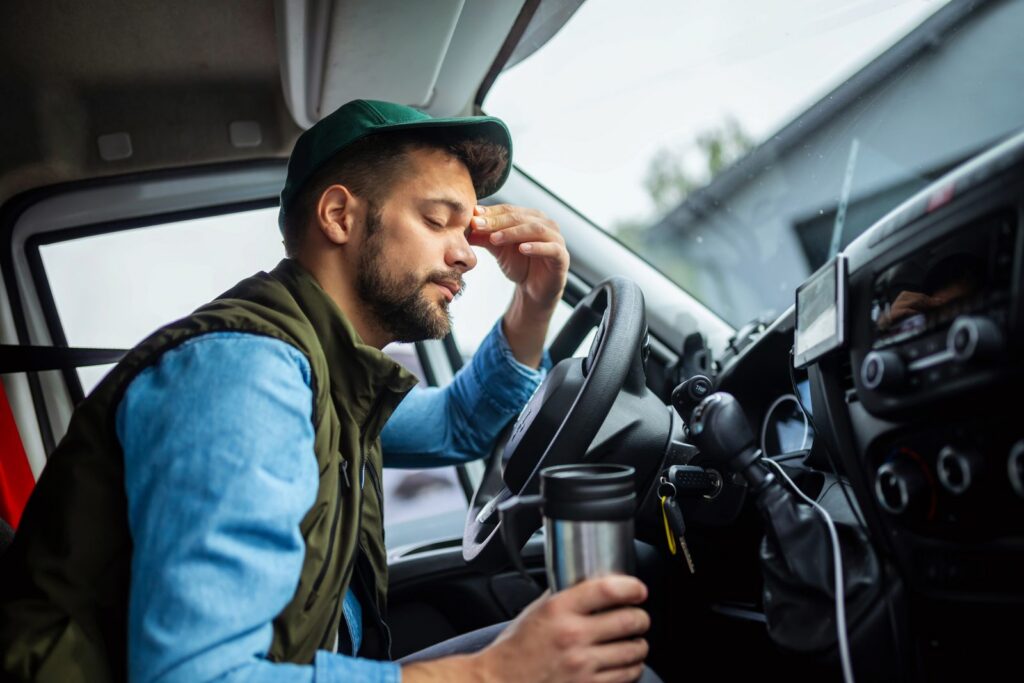
It can be. A driver on autopilot can still steer around a gentle curve, but may not react in time to something new: a stopped car, a lane closure, a merging truck, a pedestrian. Researchers do not fully agree on how much a rested driver’s reactions slow down in this state. They do agree on what happens when the driver is also tired.
NHTSA counted 644 deaths from drowsy-driving crashes in 2024. Its estimate for 2017 was 91,000 police-reported crashes, about 50,000 people injured and nearly 800 deaths. NHTSA says those numbers undercount the problem, because it is hard to prove after a crash that a driver was tired. A 2018 AAA Foundation study that used in-car video found signs of drowsiness in about 9.5 percent of crashes it studied, and about 10.8 percent of the more serious ones. Official reports put drowsy driving at only 1 to 2 percent of crashes.
NHTSA says drowsy-driving crashes most often happen between midnight and 6 a.m. or in the late afternoon, often involve a single driver running off the road at high speed with no sign of braking, and often happen on rural roads and highways. That is the same setting where highway hypnosis sets in.
Texas crash numbers
When a Texas officer writes a crash report, they can list factors that contributed to the crash. In 2025, TxDOT’s records show 8,163 crashes where an officer listed a driver as fatigued or asleep, including 98 fatal crashes and 403 crashes with a suspected serious injury. The bigger numbers sit under factors that describe what highway hypnosis looks like from the outside: a driver who did not pay attention, or who did not stay in the lane.
Fatal crashes in Texas in 2025, by what police said contributed
| Factor listed by police | Fatal crashes | Serious-injury crashes | All crashes |
|---|---|---|---|
| Did not stay in a single lane | 744 | 1,773 | 40,927 |
| Driver inattention | 229 | 1,712 | 76,918 |
| Fatigued or asleep | 98 | 403 | 8,163 |
| Distraction in vehicle | 42 | 348 | 11,122 |
Fatigue crashes are a rural problem in Texas. Of the 98 fatal crashes involving a fatigued or asleep driver in 2025, 72 happened on rural roads, even though rural and urban areas had about the same number of fatigue crashes overall (4,118 rural and 4,045 urban). Long stretches of open highway at speed leave no room for a few seconds of lost attention.
Fatigued or asleep crashes in Texas, rural vs. urban, 2025
Truck drivers, long hours and highway hypnosis
Long-haul truck drivers face the conditions that cause highway hypnosis every day: hours of interstate, the same lanes, night driving and tight delivery times. When an 80,000-pound truck drifts, the people in the other car pay for it. That is why federal rules limit how long a truck driver may drive.
| Federal rule for property-carrying trucks | What it says |
|---|---|
| 10 hours off first | A driver may not drive without first taking 10 consecutive hours off duty. |
| 11-hour driving limit | After that break, a driver may drive a total of 11 hours. |
| 14-hour window | A driver may not drive after 14 consecutive hours from coming on duty. |
| 30-minute break | Driving is not allowed once 8 hours of driving have passed without a 30-minute break. |
| 60/70-hour limit | No driving after 60 hours on duty in 7 days, or 70 hours in 8 days, depending on the company’s schedule. |
| Too tired to drive | No driver may operate a commercial truck while fatigue makes it unsafe, and a company may not require or allow it. |
The first five rules come from 49 CFR 395.3. The last one is 49 CFR 392.3. FMCSA’s hours-of-service page has a plain-language overview. Some short-haul drivers have exceptions. A driver can follow the hours rules and still be too tired to drive, and the law covers that too. If a truck driver who zoned out hits you, the driver’s logs, electronic logging data, dispatch records and phone records can show how long they had really been on the road. Trucking companies do not keep that data forever. Our guide to evidence that disappears fast after a truck accident explains what to ask for and when. You can also read about FMCSA violations after a truck accident and our truck accident practice.
If a zoned-out driver hits you, who is at fault?
Usually the driver who zoned out. Highway hypnosis is an explanation, not an excuse. Texas law requires a driver on a road with marked lanes to stay, as nearly as practical, within a single lane, and to leave it only when that can be done safely (Transportation Code 545.060). A driver who drifts into your lane, runs into the back of your car or misses a red light because their mind was elsewhere can be held responsible for the harm.
The hard part is proof. Nobody admits they were on autopilot. The evidence tends to look like this: no skid marks before the impact, a car that drifted across a line, a crash late at night or after a long shift, a driver who says they “never saw” you, or a truck driver who had been on duty for hours. Trucking companies push back hard on claims like these. Here is how trucking companies defend serious accident claims.
The other side will also look for ways to blame you. Texas compares fault. If a jury decides you are more than 50 percent at fault, you cannot recover damages (Civil Practice and Remedies Code 33.001). If you are 50 percent or less at fault, your damages are reduced by your share. Our comparative fault guide explains it in more detail.
How your share of blame changes what you can recover
What to do after a crash with a driver who zoned out
- Call 911 and get medical care. Adrenaline hides injuries.
- Tell the officer what you saw, such as the other car drifting, not braking or looking dazed. Stick to facts.
- Take photos and video of the cars, the lanes, the road and where everything ended up.
- Write down the time and what the other driver said, especially anything like “I didn’t see you” or “I’ve been driving all night.”
- Get names and phone numbers of witnesses before they leave.
- Save dashcam footage and ask nearby businesses about cameras before the video is recorded over.
- See a doctor the same day or the next, and follow the treatment plan.
- Do not give a recorded statement to the other driver’s insurance company until you have talked to a lawyer. Our recorded statement guide explains why.
- Call a lawyer quickly if a truck was involved, so someone can ask the company to keep its logs and data.
If the other driver had no insurance or too little, your own coverage may help. See our uninsured and underinsured motorist guide.
What our clients say
“My auto insurance told me that I wasn’t going to get anything at all. However, I got PAID! Thank you so much again.”
— Tiera Isom“Mr. Miller and his team is very reliable and will listen to every concern you have. They will fight to get the best outcome for you. You are granted to feel like family here.”
— Jae Malbrough“All my medical bills were paid and I still walked away with money. Erica and Julia were awesome!”
— O’Neal ThompsonThe firm holds a 4.9-star rating on Google. Read more client reviews.
Results for injured Texans
These are examples from our case results page.
Serious Vehicle Crash
Settlement obtained for a client injured in a serious motor vehicle collision.
Car Accident Trial Verdict
Attorney Adam Miller took this case to trial after a collision on Interstate 10 near Columbus, Texas. The client suffered back injuries requiring surgery. The jury returned a $325,000 verdict.
Bicyclist Hit by an 18-Wheeler
Settlement obtained for a bicyclist who was struck by an 18-wheeler.
Every case is different. Past results do not guarantee or predict a similar result in any future case. The results shown are representative examples and depend on the specific facts and circumstances of each matter.

Adam H. Miller leads The Miller Law Firm, a Houston personal injury firm known as The Texas Bulldog. The firm’s attorneys have recovered hundreds of millions of dollars for injured clients and their families through settlements and jury verdicts across Texas.
If a driver who was not paying attention hurt you, we look at the evidence before anyone decides who was at fault. The consultation is free, and you pay no attorney’s fees unless we recover money for you.
Frequently asked questions about highway hypnosis
What is highway hypnosis?
Highway hypnosis is a trance-like state some drivers slip into on long, boring or very familiar drives. You keep driving, but you are on autopilot. Many people only notice it afterward, when they reach a place and cannot remember the last few miles.
Is highway hypnosis real?
Yes. Researchers have studied it for decades, and it is also called road hypnosis or driving without awareness. Studies link it to monotonous roads and long drives. Researchers still disagree about how much it slows a driver’s reactions when the driver is not also tired.
What causes highway hypnosis?
The main causes are monotony and routine: long straight highways, the same commute every day, steady speed, and little to look at. Being tired makes it more likely, and so does driving at night.
Is highway hypnosis the same as falling asleep at the wheel?
No. With highway hypnosis your eyes are open and you are still steering, but your attention has gone dull. Drowsy driving means you are fighting sleep and may nod off. The two often show up together, and the combination is what makes a crash likely.
Is highway hypnosis dangerous?
It can be. A driver on autopilot can miss a stopped car, a lane closure or an exit, and can drift out of the lane. The risk climbs sharply when the driver is also tired. NHTSA counted 644 deaths from drowsy-driving crashes in 2024.
What are the signs of highway hypnosis?
Not remembering the last few miles, missing your exit, drifting toward the line or hitting a rumble strip, a dull or foggy feeling, heavy eyelids, slower reactions, or a passenger telling you that you look glassy-eyed.
How do you snap out of highway hypnosis?
Get your mind back on the road: sit up straight, open a window, talk, read the exit signs out loud, and turn off cruise control. If you feel sleepy, none of that is a fix. Pull off somewhere safe and rest.
How can I prevent highway hypnosis on a long drive?
Sleep well the night before, take a break about every hour or two, share the driving if you can, avoid heavy meals, and try not to drive between midnight and 6 a.m. or in the late afternoon, when drowsy-driving crashes happen most.
Do truck drivers get highway hypnosis?
Long hours on interstates are exactly the conditions that cause it. That is one reason federal rules limit a truck driver to 11 hours of driving after 10 hours off duty, require a 30-minute break after 8 hours of driving, and bar anyone from driving a commercial truck while too tired to do it safely (49 CFR 395.3 and 392.3).
Who is at fault if a driver with highway hypnosis hits me?
Usually the driver who zoned out. Texas law requires drivers to stay within a single lane and to leave it only when it is safe (Transportation Code 545.060), and every driver has to pay attention to the road. Being on autopilot is not a defense. The other side may still try to blame you, and Texas reduces or bars recovery based on each person’s share of fault.
Can I sue a trucking company if a tired truck driver hit me?
Often, yes. A trucking company can be responsible for its driver’s actions on the job, and for pushing a driver past the hours limits. Driver logs and electronic logging data can show how long the driver had been on the road, so ask a lawyer to request them early. See our guide to FMCSA violations after a truck accident.
How long do I have to file a claim after a crash in Texas?
In most cases you have two years from the date of the crash to file a lawsuit for injuries or property damage (Civil Practice and Remedies Code 16.003). See our statute of limitations guide.
Related guides
Sources
- Cleveland Clinic, Highway Hypnosis: What It Is and How To Avoid It (2023).
- Healthline, Highway Hypnosis (2020), citing Thiffault and Bergeron, “Monotony of road environment and driver fatigue: a simulator study” (2003), and Cerezuela and others, “Wertheim’s hypothesis on highway hypnosis” (2004).
- National Highway Traffic Safety Administration, Drowsy Driving.
- Federal Motor Carrier Safety Administration, Hours of Service (HOS).
- AAA Foundation for Traffic Safety, Prevalence of Drowsy Driving Crashes: Estimates from a Large-Scale Naturalistic Driving Study (2018).
- Texas Department of Transportation, Crash Contributing Factors 2025, from Motor Vehicle Crash Statistics.
- Federal Motor Carrier Safety Regulations, 49 CFR 395.3 (maximum driving time) and 49 CFR 392.3 (ill or fatigued operator).
- Texas Transportation Code, section 545.060; Texas Civil Practice and Remedies Code, sections 33.001 and 33.012, and section 16.003.