
After a Texas accident, insurance companies begin evaluating your claim immediately. Understanding how the system works can help protect your case and avoid common mistakes.
When a serious car accident happens, most people expect insurance companies to step in and help. The reality is more complicated. Insurance companies are businesses. Their goal is to limit payouts and protect their bottom line.
Understanding how the insurance system works can help you protect your rights after an accident. This guide explains how claims are evaluated, how insurers approach settlements, and why evidence and trial readiness matter.
At The Miller Law Firm – home of The Texas Bulldog – we believe injured Texans deserve to understand how the process really works. If you were recently injured, you may also want to read our guide on what to do after a car accident in Texas.
Be cautious of anyone contacting you after an accident offering legal or medical help. If you did not reach out first, it may be illegal. Learn your rights by speaking with a Texas barratry attorney.
Quick Answer
After a Texas accident, insurance companies investigate fault, review medical records, estimate damages, and negotiate settlement value. Many claims resolve through settlement negotiations, but some cases proceed to a lawsuit if insurers refuse fair compensation.
Step 1: The Claim Begins After the Accident
The following timeline explains how insurance companies typically evaluate accident claims in Texas.
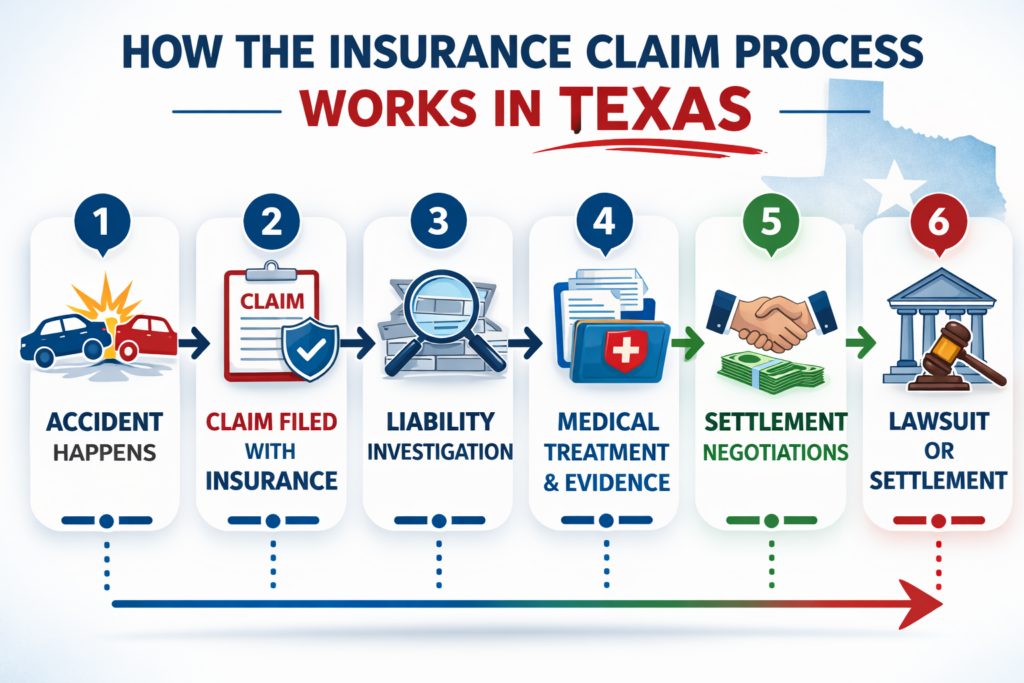
After an accident, a claim is opened with the insurance company. An insurance adjuster is assigned to investigate the crash.
The adjuster will typically:
Review the accident report
Contact the drivers involved
Request recorded statements
Review vehicle damage and photos
Analyze medical treatment
Insurance companies begin evaluating the case immediately. Early statements and evidence can strongly influence how the claim is handled.
Step 2: Insurance Companies Evaluate Liability
Before considering payment, the insurance company must determine who was at fault.
Texas follows a modified comparative fault rule, often called the 51% rule.
This means:
A person can recover damages if they are 50% or less responsible for the accident.
If a person is more than 50% responsible, they cannot recover compensation.
Insurance companies carefully analyze liability because it directly affects how much they may have to pay.
They review:
police reports
witness statements
photographs and video
vehicle damage patterns
traffic laws
Sometimes insurers argue shared fault to reduce the value of a claim.
Step 3: Medical Evidence Drives Case Value
Medical treatment is one of the most important factors in a personal injury claim.
Insurance companies review:
emergency room records
doctor evaluations
diagnostic imaging
physical therapy records
specialist reports
These records help determine:
the severity of the injury
how long recovery may take
whether permanent injury exists
Consistent treatment and clear documentation often strengthen a claim.
Step 4: Insurance Companies Calculate Claim Value
Insurance companies use internal formulas and risk models to estimate the value of a claim.
Several factors influence settlement value:
medical expenses
lost wages
long-term medical needs
pain and suffering
liability strength
insurance policy limits
Adjusters also consider how likely the case is to go to trial. Trial risk can significantly affect settlement negotiations.
Step 5: Settlement Negotiations Begin
Once medical treatment stabilizes, negotiations may begin.
The injured person or their attorney may submit a demand package. This document summarizes:
the accident details
medical treatment and bills
lost income
supporting evidence
The insurance company then reviews the demand and may respond with a settlement offer.
Initial offers are often lower than the final settlement value.
Negotiations may continue through several rounds before a case resolves.
Important Reminder
Settlement negotiations can sometimes continue for months, but negotiating with an insurance company does not pause or extend the Texas statute of limitations. If a lawsuit is not filed before the legal deadline expires, you could lose the right to pursue compensation—even if settlement discussions are ongoing. Learn more in our Texas Statute of Limitations Guide.
Step 6: Hospital Bills and Medical Liens
Medical bills often play a major role in accident settlements.
Hospitals or medical providers may assert liens against a settlement. A lien means the provider expects payment from the recovery.
Common medical obligations may include:
hospital charges
ambulance services
imaging and diagnostics
physical therapy
specialist treatment
These obligations are often negotiated before a settlement is finalized.
Step 7: Contingency Fees and Case Costs
Most personal injury lawyers work on a contingency fee basis.
This means clients usually do not pay attorney fees unless compensation is recovered.
A contingency arrangement typically means:
no upfront attorney fees
legal costs advanced by the firm
payment only if the case succeeds
This system allows injured people to pursue claims without paying legal fees upfront.
Step 8: When a Lawsuit May Be Filed
Many claims settle without a lawsuit. However, litigation may become necessary in some cases.
A lawsuit may be filed when:
liability is disputed
settlement negotiations fail
damages are significant
insurers refuse to offer fair compensation
Filing a lawsuit moves the case into the court system. This process may include discovery, depositions, and trial preparation.
The possibility of trial can influence settlement negotiations.
Why Trial-Ready Lawyers Change Settlement Negotiations
Insurance companies evaluate risk carefully. One of the biggest risks they consider is whether a case may proceed to trial.
Law firms that prepare cases thoroughly and are willing to try cases in court may create greater settlement pressure.
Trial preparation often involves:
accident reconstruction
expert witnesses
detailed medical analysis
extensive documentation
When insurers face credible trial risk, settlement discussions may change.
Understanding the System Helps Protect Your Case
The insurance process can feel confusing, especially after a serious accident. Understanding how claims are evaluated can help accident victims avoid common mistakes.
Important steps often include:
seeking medical attention
documenting the accident
understanding insurance coverage
protecting evidence
Every accident case is different, and the details can affect how a claim develops.
The Texas Bulldog Approach
At The Miller Law Firm – home of The Texas Bulldog – we believe accident victims deserve clear communication and strong legal representation. Many people feel overwhelmed after a serious accident. Medical bills, insurance calls, and legal questions can quickly become stressful. Our goal is to guide clients through the process and help them understand their rights every step of the way.
Our firm focuses on:
Evidence-driven case preparation
Transparent communication with clients
Trial-ready litigation when necessary
We take the time to investigate accidents carefully, review medical records, and build strong cases supported by evidence. At the same time, we believe clients should always understand what is happening in their case. That means explaining the legal process clearly and answering questions throughout the case.
We also help injured Texans understand important issues such as medical bills, insurance coverage, and settlement negotiations. Our goal is to make sure clients can make informed decisions while pursuing the compensation they deserve.
If you would like to learn more about our approach and what clients can expect during their case, you can learn what it’s like to work with The Miller Law Firm.

Learn More in Our Resource Center
You may also find these resources helpful:
Texas Injury Law Library
- Texas Comparative Fault Guide
- Texas Statute of Limitations Guide
- Texas Hospital Liens Guide
- Texas Paid vs. Incurred Law Guide
- Texas UM/UIM Guide
Additional Resources
- What Should I Do After a Car Accident?
- Everything You Need to Know About Auto Insurance
- Personal Injury FAQs
- Pre-Settlement Legal Funding
- Recommended Companies
Explore our complete Resources Center for additional legal guides, insurance information, financial resources, and practical information for Texas accident victims.
Visit The Texas Bulldog in Houston
The Miller Law Firm – home of The Texas Bulldog – proudly serves injured clients across Houston and surrounding Texas communities. Our office is located in the heart of Houston at Woodway Drive.
If you were injured in a car accident or serious incident, you can contact our team to discuss your case and learn about your legal options.
The Miller Law Firm – The Texas Bulldog
4900 Woodway Drive, Suite 900
Houston, Texas 77056
Phone: 713-572-3333
Client Reviews for The Miller Law Firm – The Texas Bulldog
The Miller Law Firm – home of The Texas Bulldog – is proud to have earned a 4.9-star rating from clients on Google. These reviews reflect the experiences of people we have helped after serious accidents in Houston and across Texas. Many clients mention our clear communication, thorough case preparation, and commitment to pursuing fair compensation. We encourage you to read our reviews to see what past clients say about working with our team.


Real Google Reviews for The Texas Bulldog
“Thank you so Mr. Miller! My auto insurance told me that I wasn’t going to get anything at all. However, I got PAID!!! Thank you so much again 😊”
– Tiera I. ⭐⭐⭐⭐⭐
“Adam has resolved any legal issue I have presented him with. He is by far the most competent attorney in Houston. He doesn’t bark – he bites! Thank you for all of your help”
– Mark H. ⭐⭐⭐⭐⭐
“Adam Miller has been great! I just picked up a check for a case he settled for me and I’m coming back next week for another case he has been working for me to pick up another check!”
– Brandon N. ⭐⭐⭐⭐⭐
“Mr Miller and his staff were amazing. There was never a time that he didn’t take my calls and answer my questions. Contact him for all of your legal problems.”
– Gwen B ⭐⭐⭐⭐⭐
Need Help After an Accident?
If you were injured in an accident and have questions about your claim, you can contact The Miller Law Firm – The Texas Bulldog for guidance.
Call 713-572-3333 to schedule a consultation.
Common Questions About Insurance Claims After Texas Accidents
How long does an insurance claim take after a Texas accident?
The timeline depends on the severity of injuries, liability disputes, and medical treatment. Some minor claims resolve in a few months, while serious injury cases may take longer to reach a fair settlement.
Do insurance companies try to settle claims quickly?
Insurance companies sometimes offer early settlements before the full extent of injuries is known. Accepting a settlement too quickly can limit your ability to recover additional compensation later.
What if the insurance company says the accident was partly my fault?
Texas follows a modified comparative fault rule. An injured person may recover damages if they are 50% or less responsible for the accident. However, compensation may be reduced based on the percentage of fault assigned.
What evidence helps strengthen an accident claim?
Strong evidence may include accident reports, photographs, witness statements, medical records, and documentation of lost income. Detailed evidence helps establish liability and damages.
When should someone speak with a lawyer after an accident?
It can be helpful to speak with a lawyer when injuries are serious, liability is disputed, or the insurance company offers a settlement that seems too low.