Quick Answer
An 18-wheeler caught fire on I-69 (the Southwest Freeway) near Main Street in Houston early Tuesday morning, shutting down the northbound main lanes for more than three hours. No injuries have been confirmed. Truck fires like this one destroy critical evidence fast — cargo manifests, maintenance records, and driver logs can go up with the vehicle. If you were affected by this crash, or another commercial truck fire on a Houston highway, The Texas Bulldog can help you find out what happened and who is responsible.
On This Page
What Happened on I-69 Near Main Street
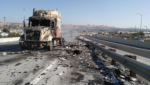
Houston TranStar flagged a heavy truck fire on I-69 (the Southwest Freeway) near Main Street and Fannin at around 2:36 a.m. Tuesday. Houston Fire Department crews arrived within minutes, but the blaze was serious enough that firefighters had to cut into the trailer to reach and extinguish the flames. The trailer was marked “China Shipping,” though its cargo was not immediately confirmed.
By 6:10 a.m., all main lanes of the freeway had been closed for more than three hours. Traffic didn’t start moving again until roughly 6:24 a.m., and even then only along the far-left side of the freeway while crews continued to clear the scene. According to preliminary reports, other drivers pulled over to help before emergency crews arrived. Injuries have not been confirmed as of this writing, and the cause of the fire is still under investigation.
Southwest Freeway commuters know this stretch well — it’s one of the busiest corridors into downtown Houston, and a closure like this one backs up traffic for miles in every direction.
Where It Happened
The fire shut down I-69’s northbound main lanes near Main Street, one of the more heavily traveled sections of the Southwest Freeway inside Loop 610.
Approximate location: I-69 (Southwest Freeway) at Main Street, Houston, TX.
Why Commercial Truck Fires Are More Dangerous Than a Typical Crash
A car accident is bad enough. A commercial truck accident adds a second layer of danger and a second layer of legal complexity. The fire itself puts nearby drivers at risk of burns and smoke inhalation, and it can trigger secondary collisions as traffic suddenly stops or swerves around a burning vehicle.
Just as important: fire destroys evidence. The data and paperwork that prove what really happened in a trucking case — electronic control module (ECM) “black box” data, brake and tire maintenance logs, cargo manifests and bills of lading, hazmat placarding, and the driver’s hours-of-service records — can be damaged in the fire itself, or simply go missing once the trucking company’s insurer gets involved. That’s why evidence in a truck accident case disappears fast, and why the first 24-48 hours matter so much.
Key Takeaway
The window to preserve black box data, maintenance logs, and cargo paperwork closes fast. Waiting even a few days can mean that evidence is gone before a claim is ever filed.
Common Causes of 18-Wheeler Fires
Industry claims data gives a clear picture of where most truck and trailer fires start:
Source: TT Club truck and trailer fire claims analysis; U.S. Fire Administration Topical Fire Report, “Highway Vehicle Fires”. Figures are approximate and rounded.
Wheel and brake fires are the single biggest category by far — often traced back to overheated brakes, worn bearings, or poor maintenance under a heavy load. That makes maintenance and inspection records some of the most important evidence in a truck fire case.
Key Takeaway
Because wheel and brake failures cause roughly 6 in 10 truck fires, a trucking company’s own maintenance and inspection records are often the single most important piece of evidence in a fire case.
Why 18-Wheelers Are Harder to Stop in the First Place
Fires aren’t the only way size and weight make big rigs more dangerous. A fully loaded 18-wheeler also needs nearly double the distance of a passenger car to come to a stop:
Source: Federal Motor Carrier Safety Administration — approximate total stopping distance at 65 mph.
What To Do If You Witness or Are Involved in a Truck Fire on the Highway
- Get to a Safe Distance: Move well away from the vehicle. Diesel fuel, tires, and cargo can all fuel a fire that spreads or reignites without warning.
- Call 911 Immediately: Even if it looks like help is already on the way, report your location and what you’re seeing.
- Do Not Approach the Vehicle: Leave firefighting and rescue to trained crews, especially if the cargo or placarding is unknown.
- Document What You Can From a Safe Location: Photos and video of the scene, traffic conditions, and visible placards can matter later, but only take them if it’s safe to do so.
- Get Medical Attention: Smoke inhalation and stress-related injuries from a sudden stop or evasive maneuver aren’t always obvious right away.
- Contact an Attorney Before Talking to the Trucking Company’s Insurer: If you were involved in the crash itself, the carrier’s insurance adjuster does not work for you.
How a Houston Truck Accident Attorney Can Help After a Trucking Fire
Trucking fire cases move fast, and so does the evidence. A Houston truck accident attorney can help by:
- Preserving Evidence Immediately: Sending a formal evidence-preservation letter to stop a trucking company from repairing, scrapping, or “losing” the truck, its black box data, and its maintenance records.
- Investigating FMCSA Violations: Federal trucking regulations govern everything from hours of service to vehicle inspections, and a violation can be strong evidence of negligence.
- Identifying Every Liable Party: Depending on the cause, liability can fall on the driver, the trucking company, a maintenance contractor, the company that loaded the cargo, or even a parts manufacturer.
- Dealing With the Insurance Company: Commercial trucking insurers move quickly to limit their exposure. An attorney handles that communication so you don’t have to.
What Our Clients Say
4.9 out of 5 stars from over 150 Google reviews.
★★★★★
“My auto insurance told me that I wasn’t going to get anything at all. However, I got PAID! Thank you so much again.”
— Tiera Isom
★★★★★
“Mr. Miller and his team is very reliable and will listen to every concern you have. They will fight to get the best outcome for you. You are granted to feel like family here.”
— Jae Malbrough
★★★★★
“Very happy with their work. I would highly recommend this law firm. They made the process easy and stress free.”
— Ivan Salazar
Frequently Asked Questions About Truck Fires on Houston Highways
Who is liable if an 18-wheeler catches fire on the highway?
It depends on what caused the fire. A tire or brake fire may point to poor vehicle maintenance by the trucking company. An electrical or engine fire may point to a manufacturing defect. A cargo fire may point to the shipper or the company that loaded the trailer. In many cases, more than one party shares responsibility.
What should I do if I was stuck in traffic near a burning 18-wheeler?
Move away from the vehicle if you’re able to, and get medical attention if you were exposed to heavy smoke, even if you feel fine. Smoke inhalation symptoms can take hours to appear. If the incident affected your commute, vehicle, or health, keep any documentation you can (dashcam footage, photos, medical records).
Can a fire destroy the evidence I need for a lawsuit?
A fire can damage physical evidence, but it rarely destroys everything. ECM “black box” data, DOT inspection records, and hours-of-service logs are often stored independently of the vehicle itself. An attorney can move quickly to request and preserve these records before they’re lost, overwritten, or discarded.
Is a trucking company responsible if a fire was caused by cargo it didn’t load?
Not always, and this is one of the more complicated questions in trucking litigation. Responsibility can fall on the shipper, a third-party loading company, the carrier, or some combination of them, depending on who packed the cargo, who inspected it, and what safety regulations applied.
How long do I have to file a claim after a Houston truck accident?
In most cases, Texas gives you two years from the date of the accident to file a personal injury lawsuit. That said, evidence in trucking cases disappears well before that deadline, so it’s best to speak with an attorney as soon as possible after a crash.
Sources
- ABC13 Houston: 18-wheeler fire closes inbound lanes of I-69 near Fannin
- Houston Chronicle: 18-wheeler fire triggers hazmat cleanup on IH-69 near Bellaire
- Hoodline: Houston I-69 Fire — 18-Wheeler Crash Shuts Freeway Near Main St
- TT Club: Truck and Trailer Fires — What Our Data Tells Us
- U.S. Fire Administration: Topical Fire Report — Highway Vehicle Fires
- Federal Motor Carrier Safety Administration: Large Truck and Bus Crash Facts
The Texas Bulldog Is Already Watching Houston’s Highways
Commercial truck fires are rare, but when they happen on a freeway as busy as I-69, the impact reaches far beyond the truck itself. If you were affected by this crash, or by another 18-wheeler accident on a Houston highway, don’t wait to find out where you stand.
Call The Texas Bulldog today at 713-572-3333 for a free consultation. We move fast because the evidence doesn’t wait — and neither should you.