

Quick Answer
You are not required to accept an insurance company’s first settlement offer. Before accepting, make sure you understand the full value of your medical expenses, lost income, property damage, future treatment, and other accident-related losses. Accepting an injury settlement usually requires signing a release that prevents you from seeking additional compensation later, even if your injuries turn out to be more serious than expected. If you have not spoken with an attorney yet, learn more about how car accident attorney fees work in Texas.
Receiving a settlement offer can feel like good news after a car accident. Medical bills may be arriving, your vehicle may still need repairs, and time away from work may be putting pressure on your household. When an insurance adjuster offers money quickly, accepting it can seem like the easiest way to move forward.
However, the first offer does not necessarily represent the full value of your claim. It may be made before you have completed medical treatment, before the long-term effects of your injuries are known, or before all of your financial losses have been documented.
The Texas Department of Insurance advises injured people to consider any future medical treatment before signing a release and deciding whether a settlement offer is fair. Once a settlement and release are finalized, it may be too late to seek additional payment for injuries or expenses connected to the same accident.
Why Trust The Miller Law Firm?
The Miller Law Firm has helped injured Texans recover compensation after serious car accidents throughout Houston and across Texas. Our attorneys negotiate with insurance companies every day and understand the factors that can affect the value of a personal injury settlement. This guide is designed to help you make a more informed decision before accepting an insurance company’s first offer.

Table of Contents
- Why Insurance Companies Make Early Settlement Offers
- Is the First Settlement Offer Usually Fair?
- What Happens After You Accept a Settlement?
- What Should a Car Accident Settlement Cover?
- Why Your Case May Be Worth More Than the First Offer
- 7 Common Mistakes People Make Before Accepting a Settlement
- When It May Make Sense to Accept the First Offer
- When You Should Negotiate Instead
- Factors That Can Increase the Value of Your Settlement
- How Medical Treatment Affects Your Settlement
- How to Respond to a Low Settlement Offer
- Texas Laws That May Affect Your Settlement
- Can You Reopen a Settlement After Signing?
- Frequently Asked Questions
- Speak With a Texas Car Accident Lawyer Before You Sign Anything
Why Insurance Companies Make Early Settlement Offers
Many people are surprised when an insurance company contacts them with a settlement offer only days or weeks after a car accident. While a quick payment may seem like a sign that the insurer wants to resolve your claim fairly, there are several reasons insurance companies often make early offers before the full extent of your injuries and financial losses are known.
One of the biggest reasons is uncertainty. Immediately after an accident, you may still be undergoing medical evaluations, waiting for imaging results, or beginning physical therapy. At this stage, neither you nor your doctors may know whether your injuries will heal quickly or require months of treatment. An early settlement allows the insurance company to resolve the claim before those future costs become clear.
Early offers can also be appealing because accident victims are often facing immediate financial pressure. Medical bills, vehicle repairs, lost income, and everyday expenses can make a lump-sum payment seem like the quickest solution. However, accepting an offer too soon could mean giving up the right to recover compensation for future medical care, ongoing pain, reduced earning capacity, or other damages that were not yet apparent.
Key Takeaway
A fast settlement offer does not necessarily mean it is a fair settlement offer. In many cases, the insurance company simply wants to resolve the claim before the full value of your injuries and losses can be determined.
This does not mean every insurance company acts improperly or that every initial offer is unfair. Rather, it means you should understand exactly what the offer covers—and what rights you may be giving up—before deciding whether to accept it.
Is the First Settlement Offer Usually Fair?
There is no rule that says an insurance company’s first settlement offer is unfair. In some cases—particularly those involving only minor property damage and no physical injuries—the initial offer may accurately reflect the value of the claim. However, when someone suffers injuries in a Texas car accident, determining whether an offer is fair usually requires a much closer look.
A fair settlement should account for more than the medical bills you have already received. Depending on the circumstances, it may also include future medical expenses, lost wages, diminished earning capacity, pain and suffering, mental anguish, physical impairment, property damage, and other accident-related losses. If these damages have not yet been fully evaluated, it may be difficult to know whether the offer reflects the true value of your claim.
| Questions to Ask Before Accepting | Why It Matters |
|---|---|
| Have I completed medical treatment? | Future treatment could significantly increase the value of your claim. |
| Do I know the full extent of my injuries? | Some injuries become more serious over time. |
| Have all of my lost wages been calculated? | Missing work may continue long after the first settlement offer. |
| Have I reviewed the settlement with an attorney? | Understanding what you are giving up before signing can help you make an informed decision. |
Before You Sign Anything
Most injury settlements require you to sign a release of claims. Once you sign that document and the settlement is finalized, you generally cannot return later and ask for more money if additional injuries, medical bills, or complications arise from the same accident.
What Happens After You Accept a Settlement?
Accepting an insurance company’s settlement offer is usually the final step in resolving your injury claim. While receiving compensation can provide financial relief, it’s important to understand exactly what happens after you agree to settle. In most cases, accepting a settlement means your claim is permanently closed, and you cannot seek additional compensation for the same accident later.
Before you receive payment, the insurance company will typically ask you to sign a document called a Release of Claims. This legal agreement states that you accept the settlement amount in exchange for releasing the at-fault party and their insurance company from any future liability related to the accident. Once the release is signed and processed, the insurer generally issues your settlement check.
If you hired a personal injury attorney, the settlement funds are often sent to the attorney’s trust account first. Outstanding medical liens, case expenses, and attorney’s fees are typically resolved before the remaining settlement proceeds are distributed to you. If you handled your claim without a lawyer, the insurance company may send the payment directly to you after the release is finalized.
Because accepting a settlement usually ends your legal claim, it is important to understand the full extent of your injuries and damages before signing anything. If additional medical complications arise after the settlement has been finalized, you generally cannot return to the insurance company and ask for more money.
Key Takeaway
Accepting a settlement is more than accepting a check—it usually means permanently resolving your claim. Before signing a release, make sure you understand both the amount being offered and the legal rights you may be giving up.
What Should a Car Accident Settlement Cover?
Every car accident claim is different, but a fair settlement should reflect the full impact the accident has had on your life—not just the bills you’ve already received. Depending on the circumstances, a settlement may compensate you for both your current losses and reasonably anticipated future damages.
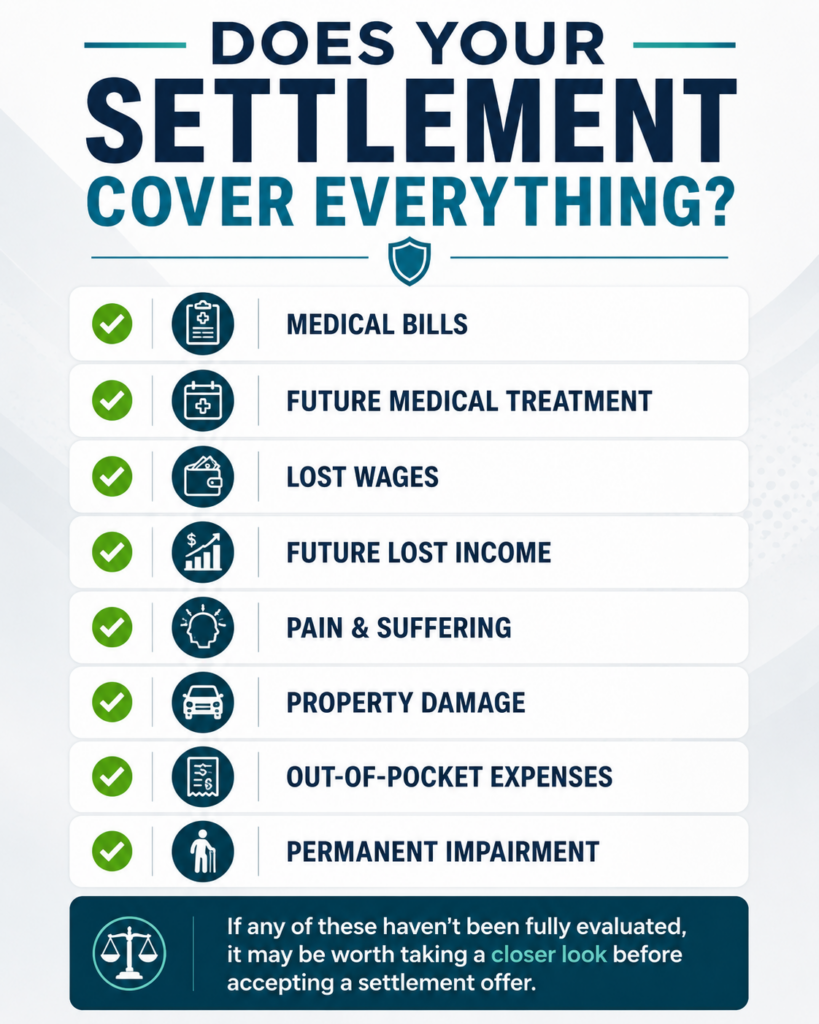
Before deciding whether to accept an insurance company’s first settlement offer, consider whether each of the following categories has been fully evaluated.
| Type of Damage | Examples |
|---|---|
| Medical Expenses | Emergency care, surgery, therapy, prescriptions, follow-up treatment |
| Future Medical Treatment | Additional surgeries, rehabilitation, injections, long-term care |
| Lost Wages | Income lost while recovering from your injuries |
| Future Lost Income | Reduced earning capacity caused by permanent injuries |
| Pain & Suffering | Physical pain, emotional distress, reduced quality of life |
| Property Damage | Vehicle repairs or replacement and damaged personal property |
| Out-of-Pocket Expenses | Transportation, medications, medical equipment, and other accident-related costs |
| Permanent Impairment | Long-term limitations that affect your daily life or ability to work |
No two injury claims are exactly alike. Some cases may involve only a few of these damages, while others may involve nearly all of them. The key is making sure your settlement reflects the full extent of your losses before you agree to resolve your claim.
Why Your Case May Be Worth More Than the First Offer
One of the biggest reasons accident victims regret accepting an early settlement is that they later discover their claim was worth more than they realized. Immediately after a crash, it can be difficult to understand the full extent of your injuries, financial losses, and future medical needs. As time passes, new information often comes to light that can significantly affect the value of a claim.
For example, what initially appears to be a minor neck or back injury may eventually require months of physical therapy, pain management, injections, or even surgery. Likewise, someone who expected to return to work within a few days may find themselves unable to perform their job for weeks or months. These additional damages are difficult to calculate if a settlement is accepted too early.
Insurance adjusters evaluate claims using the information available at the time the offer is made. If your medical treatment is still ongoing, your future prognosis is uncertain, or your lost wages continue to increase, the first settlement offer may not fully reflect the true value of your claim.
Reasons Your Case Could Be Worth More Than the First Offer
| What Changed? | How It Can Affect Your Settlement |
|---|---|
| Your injuries became more serious. | Additional medical treatment and higher damages may increase the value of your claim. |
| Your doctor recommends future treatment. | Future medical expenses should be considered before settling. |
| You missed more work than expected. | Additional lost wages may increase your economic damages. |
| Your daily life is affected. | Pain, limitations, and reduced quality of life may support additional compensation. |
| New evidence becomes available. | Medical records, witness statements, or expert opinions may strengthen your claim. |
Red Flag
If the insurance company asks you to settle before you have completed medical treatment or before your doctor understands your long-term prognosis, you may not yet know the full value of your claim.
Key Takeaway
The value of a personal injury claim often becomes clearer over time. Before accepting the insurance company’s first settlement offer, consider whether your medical treatment, lost income, and long-term recovery have been fully evaluated.
7 Common Mistakes People Make Before Accepting a Settlement
Accepting a settlement is a major financial and legal decision. While every case is unique, there are several common mistakes that can reduce the value of a claim or leave accident victims wishing they had waited before signing a settlement agreement. Understanding these pitfalls can help you make a more informed decision.
1. Accepting the First Offer Too Quickly
It can be tempting to accept a settlement when medical bills and everyday expenses begin piling up. However, accepting the first offer before understanding the full extent of your injuries could leave you without compensation for future medical treatment or additional losses.
2. Settling Before Completing Medical Treatment
If you are still receiving treatment, your doctor may not yet know your long-term prognosis. Waiting until your condition has stabilized often provides a clearer picture of the damages resulting from the accident.
3. Underestimating Future Medical Expenses
Some injuries require follow-up appointments, physical therapy, injections, surgery, or long-term pain management. These future costs should be considered before agreeing to a final settlement.
4. Forgetting About Lost Income
Many people focus only on medical bills while overlooking missed paychecks, lost bonuses, reduced hours, or diminished earning capacity caused by their injuries.
5. Not Reading the Release Carefully
The settlement agreement may permanently release your legal claims related to the accident. Before signing, make sure you understand exactly what rights you are giving up.
6. Assuming the Insurance Company Calculated Everything Correctly
Insurance adjusters evaluate claims using the information available to them. If medical records, wage documentation, or other evidence is incomplete, the initial settlement may not fully reflect the value of your claim.
7. Making a Decision Without Asking Questions
Before accepting any settlement, make sure you understand how the amount was calculated, what damages are included, and whether future expenses have been considered. If something is unclear, ask for an explanation before signing any documents.
Settlement Checklist
- ✓ Have I completed—or nearly completed—medical treatment?
- ✓ Do I understand my long-term prognosis?
- ✓ Have all of my lost wages been documented?
- ✓ Have future medical expenses been considered?
- ✓ Do I understand what I’m releasing by signing?
- ✓ Have all of my questions been answered?
When It May Make Sense to Accept the First Offer
While many injury claims deserve careful evaluation before settling, that does not mean every first settlement offer should be rejected. In some situations, the insurance company’s initial offer may fairly compensate you for your losses. The key is making an informed decision based on the facts of your specific case rather than assuming the first offer is automatically too low—or automatically fair.
For example, a claim involving only minor vehicle damage and no physical injuries may be resolved relatively quickly. Likewise, if your medical treatment has been completed, your expenses are fully documented, and the settlement fairly reflects your losses, accepting the first offer may be a reasonable option.
Situations Where Accepting the First Offer May Be Reasonable
| Situation | Why It May Make Sense |
|---|---|
| Property damage only | No injury claim remains to evaluate. |
| Minor injuries with completed treatment | Medical expenses and recovery are already known. |
| All damages have been documented | Medical bills, lost wages, and other losses have been fully calculated. |
| The settlement reflects your total losses | The offer appears to account for both economic and non-economic damages when appropriate. |
Key Takeaway
There is no rule that says you should always reject—or always accept—the insurance company’s first settlement offer. The right decision depends on whether the offer fairly reflects the full extent of your injuries, expenses, and other damages.
When You Should Negotiate Instead
In many Texas car accident claims, the first settlement offer is simply the beginning of the negotiation process—not the final word. If you believe the offer does not fully compensate you for your injuries or financial losses, you may have the opportunity to negotiate for a higher amount. The goal is not to reject an offer simply because it is the first one, but to ensure the settlement fairly reflects the value of your claim.
Negotiation often involves providing additional information that supports your damages. Updated medical records, proof of lost income, repair estimates, or documentation showing the long-term effects of your injuries may help explain why a higher settlement is appropriate.
Signs It May Be Worth Negotiating
| Situation | Why Negotiation May Help |
|---|---|
| You are still receiving medical treatment. | The full cost of your injuries may not yet be known. |
| The offer does not include all of your lost wages. | Additional documentation may increase your economic damages. |
| Future medical care has been recommended. | Future expenses should be considered before settling. |
| The offer seems significantly lower than your documented losses. | Additional evidence may support a higher settlement. |
| You have not yet gathered all of your records. | A complete picture of your damages can lead to a more informed evaluation. |
Negotiation Tip
Successful negotiations are generally based on evidence—not emotion. Medical records, treatment recommendations, wage documentation, photographs, and other supporting evidence can help explain why a settlement offer should be reconsidered.
How Medical Treatment Affects Your Settlement
Medical treatment is one of the most important factors in evaluating a Texas car accident claim. Insurance companies often review your medical records to better understand the nature of your injuries, the treatment you received, how long your recovery lasted, and whether your injuries continue to affect your daily life. While every case is different, the medical evidence available can play a significant role in determining the value of a settlement.
Seeking prompt medical attention after an accident not only helps protect your health, but it also creates documentation linking your injuries to the crash. As treatment continues, medical records help demonstrate the progression of your injuries, the care you received, and your doctor’s recommendations for future treatment, if any.
On the other hand, large gaps in treatment, repeatedly missing appointments, or stopping care without discussing it with your healthcare provider may raise questions during the claims process. Depending on the circumstances, an insurance company may argue that your injuries improved sooner than claimed or that additional treatment was unnecessary. That does not automatically mean your claim lacks merit, but it highlights the importance of consistent medical documentation whenever possible.
How Medical Treatment May Influence a Settlement
| Medical Evidence | Why It May Matter |
|---|---|
| Prompt medical evaluation | Creates documentation connecting injuries to the accident. |
| Consistent treatment | Provides a clearer picture of your recovery and ongoing symptoms. |
| Specialist recommendations | May help document future medical needs or permanent injuries. |
| Complete medical records | Help support the damages being claimed. |
Remember
Your medical decisions should always be based on your doctor’s advice and your health—not on trying to increase the value of a settlement. Following your treatment plan helps you recover while also creating accurate documentation of your injuries.
Key Takeaway
Medical records help tell the story of your recovery. Consistent treatment and thorough documentation can provide a clearer understanding of your injuries, while making healthcare decisions based on your physician’s recommendations helps protect both your health and your claim.
How to Respond to a Low Settlement Offer
Receiving a settlement offer that seems too low can be frustrating, especially if you’re still dealing with medical treatment, missed work, or ongoing pain. Fortunately, an initial offer is often just the beginning of the claims process. Depending on the circumstances, you may be able to provide additional information and continue negotiating before deciding whether to settle.
Rather than immediately accepting or rejecting the offer, take time to understand how the insurance company arrived at its valuation. Reviewing the supporting documentation can help identify whether medical expenses, lost wages, property damage, or other losses may have been overlooked or underestimated.
Steps to Take Before Responding
| Step | Why It’s Important |
|---|---|
| Review the offer carefully | Understand exactly what damages are included before making a decision. |
| Gather updated documentation | Additional medical records, bills, or wage information may support your claim. |
| Identify missing damages | Confirm whether future treatment, lost income, or other losses were considered. |
| Ask questions | If something is unclear, request an explanation before signing any documents. |
| Respond with supporting evidence | Negotiations are generally strongest when supported by documentation rather than assumptions. |
What You Should Avoid
- Making a rushed decision because you feel pressured.
- Signing a release before understanding what it means.
- Assuming the first offer is the best or only offer available.
- Overlooking future medical treatment or ongoing financial losses.
Key Takeaway
A low settlement offer does not necessarily mean negotiations are over. Before making a decision, review the offer carefully, confirm that all of your damages have been considered, and gather any additional documentation that may help support your claim.
Texas Laws That May Affect Your Settlement
While every personal injury claim is unique, several Texas laws may influence how a settlement is evaluated. Understanding these rules can help you make a more informed decision before accepting an insurance company’s first settlement offer. Because every case involves different facts, it’s important to evaluate how these laws may apply to your specific situation.
Modified Comparative Responsibility
Texas follows a modified comparative responsibility rule. This means that if more than one person contributed to an accident, responsibility may be divided among the parties involved. If an injured person is found to be more than 50% responsible for the accident, they generally cannot recover damages from the other party. If they are 50% or less responsible, their recovery may be reduced by their percentage of responsibility.
Statute of Limitations
Texas law generally places a deadline on filing a personal injury lawsuit. Waiting too long to pursue a claim could affect your legal rights. If you’re unsure how much time you have to take legal action after a crash, read our guide on how long after a car accident you can file an injury claim in Texas. Although many claims settle before a lawsuit becomes necessary, it is important to understand that settlement negotiations do not automatically extend legal deadlines.
Insurance Policy Limits
In some cases, the available insurance coverage may affect the amount that can be recovered from an insurance company. Even when damages exceed the available policy limits, additional legal issues may need to be evaluated depending on the facts of the case and the parties involved.
Why These Laws Matter
The value of a settlement is not determined solely by the seriousness of an injury. Questions involving fault, insurance coverage, legal deadlines, and available evidence can all affect how a claim is evaluated. Understanding these factors can help you better assess whether a settlement offer reflects the circumstances of your case.
Texas Settlement Law at a Glance
| Texas Law | Why It Matters |
|---|---|
| Modified Comparative Responsibility | Your percentage of fault may affect whether—and how much—you can recover. |
| Statute of Limitations | Waiting too long to file a lawsuit may affect your legal rights. |
| Insurance Policy Limits | Available insurance coverage may affect the amount that can be recovered. |
Can You Reopen a Settlement After Signing?
One of the most common questions accident victims ask is whether they can reopen their case after accepting a settlement. In most situations, the answer is no. Once you sign a settlement agreement and a Release of Claims, your claim is generally considered resolved. If you have already signed with another law firm and are unsure about your options, you may also want to read our guide on whether you can cancel a personal injury lawyer contract in Texas. That means you typically cannot return later and ask the insurance company for additional compensation related to the same accident.
This is one of the primary reasons it is so important to fully understand your injuries and damages before accepting an insurance company’s first settlement offer. While receiving a settlement check may provide immediate financial relief, signing a release usually ends your right to pursue additional compensation against the at-fault party for that claim.
There may be limited exceptions depending on the specific facts of a case, the language of the settlement agreement, or other legal issues. However, those situations are uncommon. In most cases, once a settlement is finalized, it is intended to permanently resolve the dispute.
Questions to Ask Before Signing a Settlement Agreement
| Question | Why It Matters |
|---|---|
| Have I completed my medical treatment? | Future treatment may affect the overall value of your claim. |
| Do I understand what the release says? | The release generally explains which legal claims you are giving up. |
| Have all of my damages been documented? | Medical expenses, lost wages, and other losses should be evaluated before settling. |
| Have I considered future medical care? | Unexpected treatment after settlement may not be covered by the agreement. |
| Have all of my questions been answered? | Understanding the agreement before signing can help you make an informed decision. |
Important Reminder
A settlement agreement is a legally binding contract. Before signing any release, make sure you understand what compensation you are receiving and what legal rights you may be giving up.
Key Takeaway
In most cases, you cannot reopen a personal injury settlement after signing a release of claims. Taking the time to understand your injuries, future medical needs, and the terms of the settlement before signing can help you avoid difficult surprises later.
Frequently Asked Questions
Should I accept the insurance company’s first settlement offer?
Not necessarily. Before accepting any settlement offer, make sure you understand the full extent of your injuries, medical expenses, lost income, and any future damages that may result from the accident. Every case is different, so the right decision depends on the specific facts of your claim.
Can I negotiate a settlement offer?
In many cases, yes. Settlement negotiations often involve exchanging additional documentation, discussing the evidence, and evaluating the damages being claimed. The strongest negotiations are generally supported by medical records, wage documentation, and other evidence.
How long do settlement negotiations usually take?
There is no standard timeline. Some claims are resolved within a matter of weeks, while others may take months depending on the severity of the injuries, ongoing medical treatment, liability issues, and the willingness of both sides to negotiate.
Should I finish medical treatment before settling?
Many injury claims are easier to evaluate once your medical condition has stabilized and your future treatment needs are better understood. Every situation is different, but understanding your long-term prognosis can help you make a more informed decision.
Can I reopen my settlement after signing a release?
In most cases, no. Once a settlement agreement and release have been signed, your claim is generally considered resolved. That is why it is important to understand your injuries and damages before accepting a settlement.
Does accepting a settlement mean I admit fault?
Not necessarily. A settlement resolves a legal claim, but it does not automatically mean you admitted responsibility for causing the accident. The terms of every settlement agreement are different, so it is important to understand what the agreement says before signing it.
Do I need a lawyer to negotiate with the insurance company?
You are not required to have a lawyer to negotiate a settlement. However, many people choose to seek legal guidance when serious injuries, disputed liability, or significant damages are involved.
What if I don’t understand the settlement agreement?
Never feel pressured to sign an agreement you do not understand. Ask questions, review the terms carefully, and make sure you understand what compensation is being offered and what legal rights you may be be giving up before signing.
Before You Sign Anything
Understand Your Rights Before Accepting a Settlement Offer

Accepting an insurance company’s first settlement offer is an important decision that may have lasting financial and legal consequences. Before signing a release or agreeing to a settlement, make sure you understand the full extent of your injuries, your future medical needs, and the damages your claim may involve.
If you’ve been injured in a Texas car accident and have questions about a settlement offer, the attorneys at The Miller Law Firm are here to help. We can evaluate your situation, explain your legal options, and help you make an informed decision about your claim.