Request
a free consultation
Our team of lawyers is available to provide you with the ultimate free case evaluation.
Accidents that occur on any type of vessel are covered by maritime law. Unfortunately, according to the Bureau of Safety and Environmental Enforcement, injuries are sustained in offshore accidents every single day in the Gulf of Mexico. Maritime law in Texas is very complex and litigation involves some of the most complicated laws that any attorney can handle. Therefore, if you have been injured offshore it is vital you hire an experienced law firm to help navigate filing a suit. The Texas Bulldog is an Offshore and Maritime Attorney in Texas and he will fight tenaciously to recover money for your offshore injuries, including lost wages, medical bills and pain and suffering.
Texas is home to many offshore jobs in and around the Gulf. Unfortunately, accidents are far too common. Even worse, the possibility of experiencing a medical emergency out in the middle of the ocean makes working offshore very dangerous. Not all vessels and rigs are equipped with onboard medical facilities. When it comes to serious accidents, it can take much longer for a life flight helicopter to reach injured workers.
At The Miller Law Firm we understand the complexities of maritime and offshore accident cases. Our attorneys have helped many victims of offshore accidents get the compensation they deserve after an accident. We fully understand the difficulties that workers face on large vessels. The Texas Bulldog will give the utmost attention to your maritime accident case.
Common Offshore Accidents:
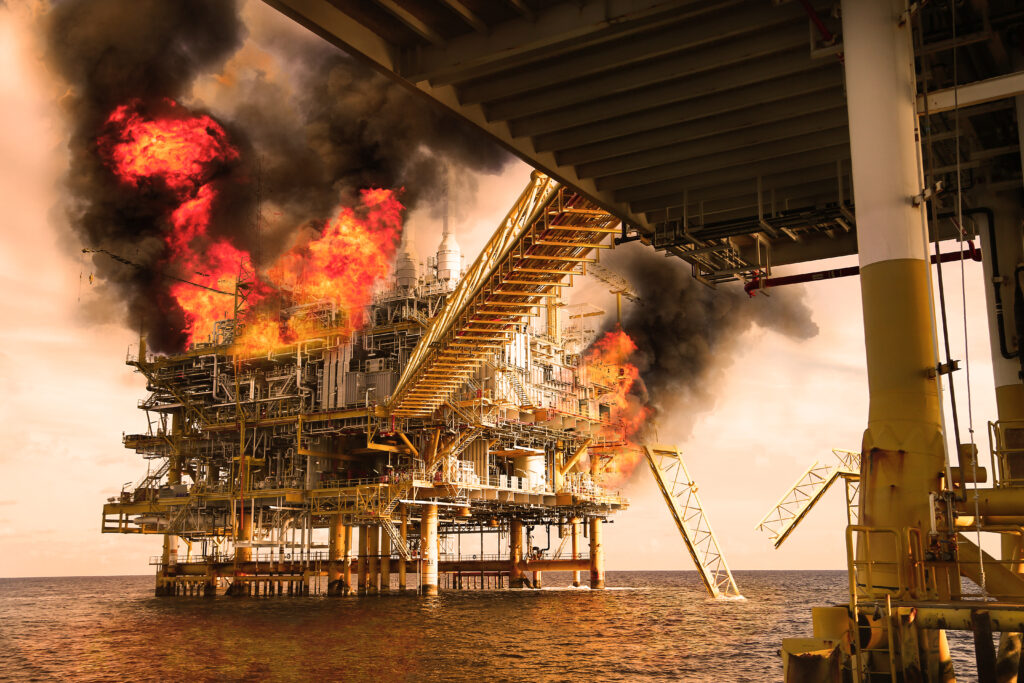
There are thousands of maritime and offshore accidents in the gulf each year due to the negligence of people and entities. The most common offshore accidents are listed below:
- Offshore explosions
- Chemical leaks
- Fires
- Capsizing vessels
- Falling debris
- Vessel collisions
- Hurricanes/sudden storms/rough seas
- Equipment malfunctions
- Slips and falls
- Crane collapses
- Poor training or inadequate safety policies
Texas Maritime and Offshore Accident Attorney
Offshore rigs can be perilous workplaces. Offshore workers are hardened and tough men and women. They are on the job for up to twelve hours each day, performing intense physical labor. They deserve to know that if they do get hurt, they’ll receive the financial support they deserve while they recover. Ship and oil rig owners have a legal obligation to provide a safe environment for all of their employees. Our attorneys are passionate about securing full and fair compensation for victims of maritime accidents.
How Much Will It Cost to Hire an Offshore Accident Attorney
The Texas Bulldog will never charge anything unless he wins your case. We have a contingency fee contract, which means The Miller Law Firm will not get paid unless you recover money. Additionally, our firm will cover all the costs associated with researching your case, prosecuting and litigation. We will also cover the costs of doctor visits, court visits, loans for living expenses and if we need to hire an expert for trial. If The Texas Bulldog wins your case, we’re reimbursed those costs. If we’re not successful, then we lose those costs.
Contact Our Law Firm
At The Miller Law Firm, we focus on helping injured victims and their families get the most they deserve of their financial recovery. We know that the success of your case depends on our hard work and dedication. Our attorneys will always go the extra mile from the initial investigation through all facets of the legal process to help you get the best outcome possible. The Texas Bulldog will fight aggressively to ensure that you receive a favorable outcome for your case, whether negotiating with an insurance company or taking a case to trial. Contact Us today by calling 713-572-3333 to schedule a free consultation. Our attorneys are available to discuss how we can help you favorably resolve your case.
Practice Areas